Learn more about the courses and details of this degree in our program guide.


Chat with a live agent now.
 No thanks
Engineering technology is behind many of today’s most exciting innovations, from automated manufacturing systems to smart healthcare devices. With an engineering technology degree, you can develop the skills to design, test, and improve the technology that drives industries forward.
At DeVry University, our engineering tech bachelor’s program helps you build experience with automation, advanced computing, and industrial systems. You’ll learn to solve complex challenges, integrate smart technologies, and optimize real-world processes in fields like healthcare, manufacturing, and logistics. With access to industry-standard tools and real-world applications, you’ll be prepared to take the next step in your engineering technology career:
Engineering technology is all about turning ideas into real-world solutions. In this program, you’ll develop practical skills that can help you innovate, troubleshoot, and improve the technology that powers industries like automation, healthcare, manufacturing, and logistics.


Learn more about the courses and details of this degree in our program guide.

Certification prep: Build the skills needed to prepare for industry-recognized certifications to help you stand out to employers, including:

Exam reimbursement: We’ll cover 1 certification exam attempt (up to $300 on select CompTIA exams) to reduce barriers and help you gain credentials that matter in today’s job market.

Professional connections: Join organizations like the Institute of Electrical and Electronics Engineers (IEEE) to build your network.

Industry-aligned courses: Choose electives tailored to today’s job market, giving you specialized knowledge in automation, data security, programming, and more — helping you stand out to employers.
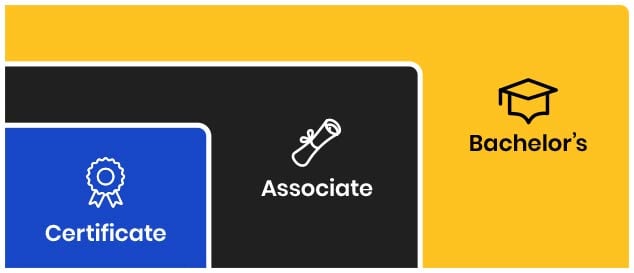
As you work toward your Bachelor’s in Engineering Technology, you'll also earn 2 other credentials automatically along the way:
This way, you can learn new skills and build your resume as you go — and gain industry-recognized qualifications you can put into action on the path toward your bachelor’s.1

Being accredited means we’ve met rigorous quality standards and are committed to giving you the education you deserve. Our accreditations and recognitions include:

With a Bachelor’s in Engineering Technology, you can step into a world of innovation, problem-solving, and cutting-edge technology. Whether you're maintaining critical network systems, optimizing manufacturing processes, or working with automation, your skills can help businesses operate smarter and more efficiently.
Depending on your interests, you might pursue careers such as:
At DeVry, we’re here to help you take the next step. Our Career Services team offers resume-building help, interview prep, and job search resources to support you as you pursue opportunities in the field of engineering technology.
Discover options that can help make your education more affordable.

Save money with a variety of scholarship and grant opportunities.3

Your hard work matters: Transfer up to 80 qualifying credit hours.

Find out if your employer offers tuition savings or reimbursement.

Learn about savings for veterans, active-duty U.S. military members, and their spouses.
1Future programmatic changes could impact the ability to earn additional credentials en route to an eligible degree program at DeVry. Refer to the academic catalog for details.
2Assuming enrollment in 12-18 credit hours per semester; enrollment in additional credit hours may be needed in some semesters.
3Scholarships are available to those who apply and qualify. Click here for more information, including any requirements or restrictions. Students may participate in only one DeVry University-based scholarship, grant, or group tuition benefit program at a time. Those who qualify for more than one program will be presumed to accept the program with the highest reduction per session cost, unless the student confirms their desire to participate in a different program in writing prior to starting classes at DeVry. Scholarship and grant terms and eligibility conditions are subject to change.



